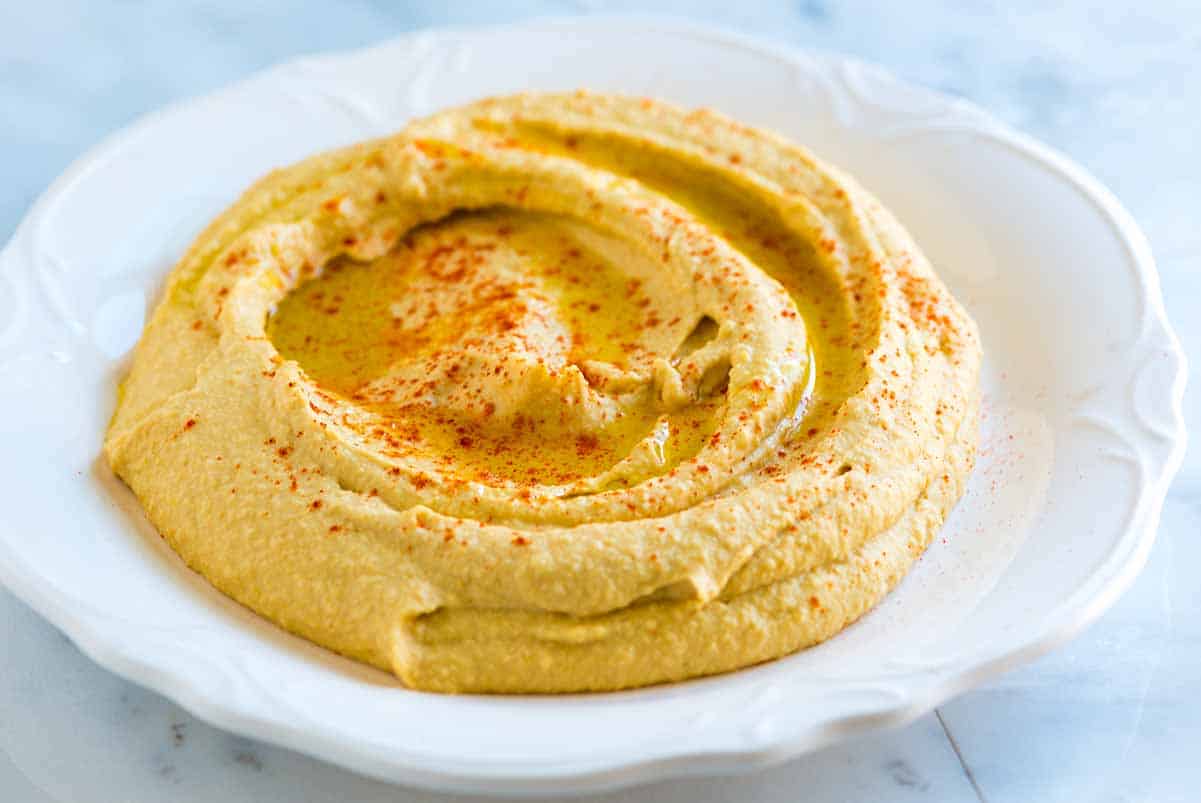
My favorite hummus recipe! With a few simple tricks, you can make the best creamy, smooth homemade hummus, and yes, it’s better than store-bought.
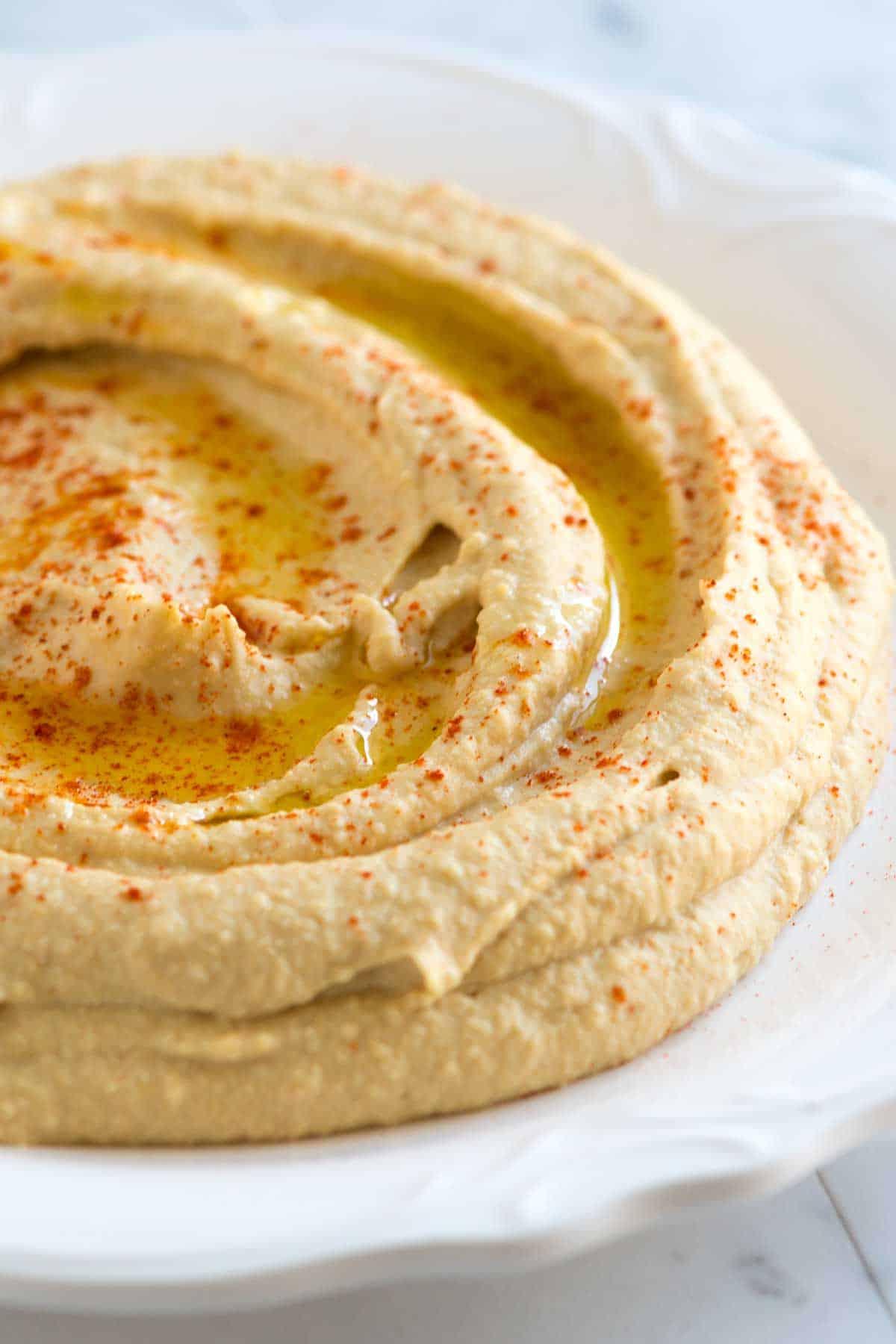
Hummus is a delicious spread (or dip) made from chickpeas, tahini, lemon, and spices. It is a popular dish in the Middle East and the Mediterranean. You can find it in most grocery stores, but trust me, you’ll want to skip those and make your own. Homemade hummus is just so much better!
This hummus recipe is a keeper (our family’s been making it for years!). So many of our readers swear it’s their forever hummus recipe, too. I’ve also shared our recipe for roasted red pepper hummus, which I bet you’ll also love!
Key Ingredients
- Chickpeas (or garbanzo beans): These are the base for my hummus, and they can be canned or cooked from scratch. I use both, but homemade chickpeas have a slightly better flavor.
- Tahini: This sesame seed paste makes the hummus so delicious. You can buy it at the store or make your own. I prefer homemade because it makes my hummus 100% from scratch. Here’s my homemade tahini recipe. To make hummus without tahini, see my tips below the recipe.
- Lemon juice: Skip the bottled stuff! Fresh lemon juice makes all the difference in great hummus.
- Garlic: I use one small clove for just the right amount of flavor, but you can add more for a stronger garlic flavor or use roasted garlic instead. Here’s how to roast garlic.
- Ground cumin and salt: Both improve the flavor of our hummus, and the cumin adds a little extra richness and spice. In our video, I sprinkle Za’atar seasoning on top for serving, which I love!
- Olive oil: This gives my hummus a luxuriously smooth texture. I also like to drizzle a little extra on top when serving. Fruity, light-flavored olive oils are my favorite for making hummus.
How to Make Hummus from Scratch
The secret to the best hummus is all about the order in which you blend your ingredients! Seriously, this simple trick makes a huge difference.
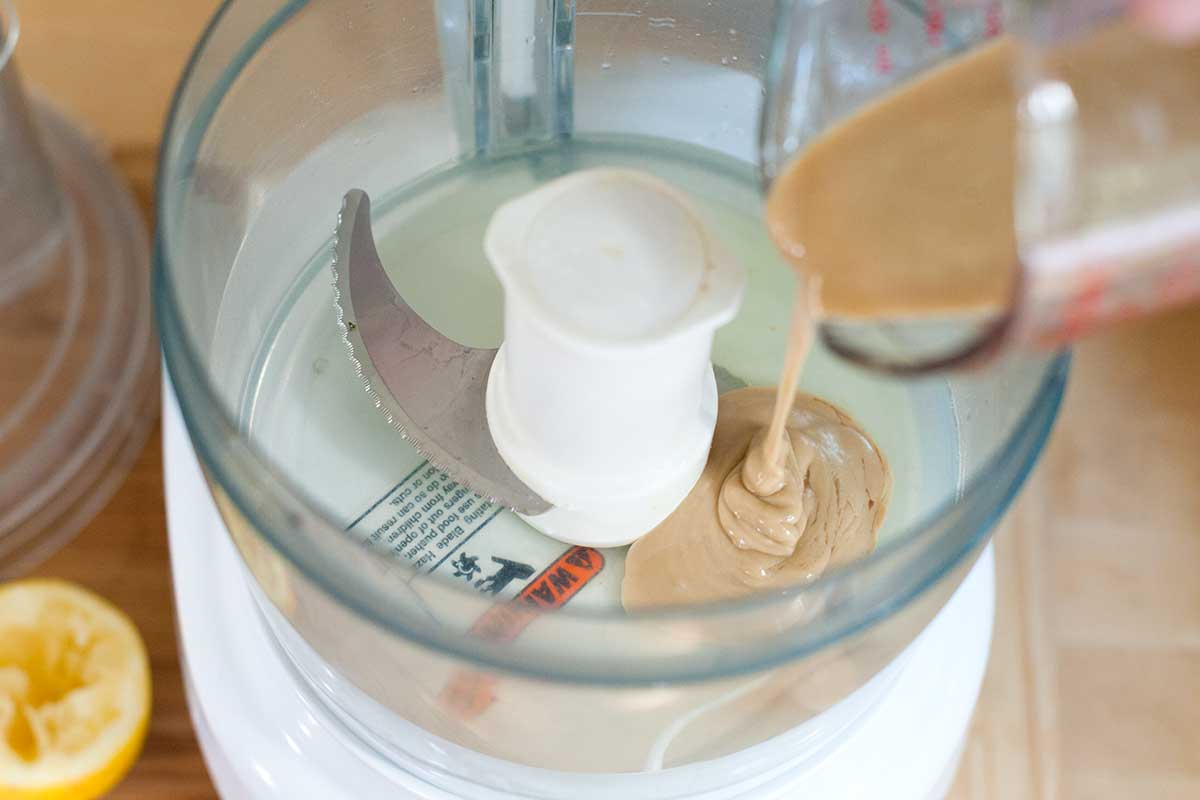
Tahini and lemon juice go in first. Then, before you add anything else, turn on the food processor and let it run for a minute or two. See the photos below? In the first photo, I’m pouring tahini into a clean food processor.
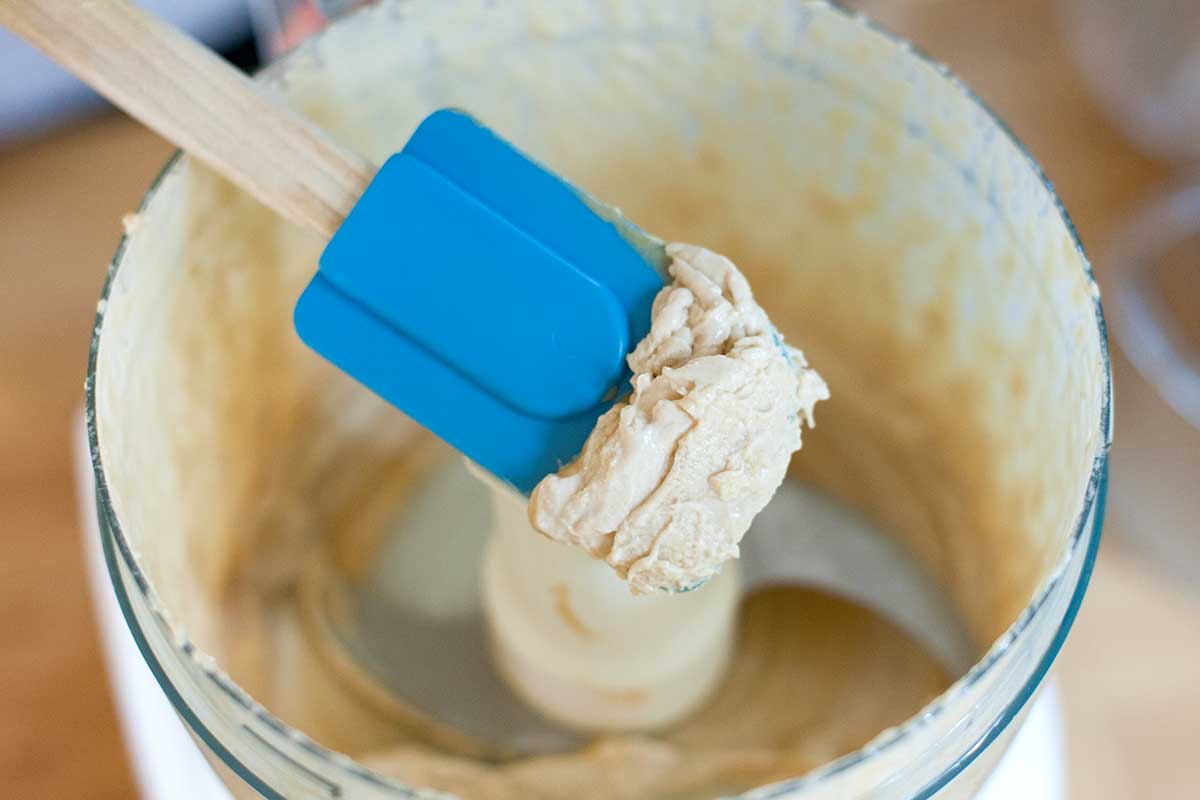
After a minute of being whirled, whipped, and creamed in the food processor, it turns into the paste you see in the next photo. It’s lighter in color and much thicker.
Now, we can add the remaining hummus ingredients. I like adding the chickpeas in two batches, processing the first batch for a minute before adding the rest. Then, I stand back and let my food processor run.
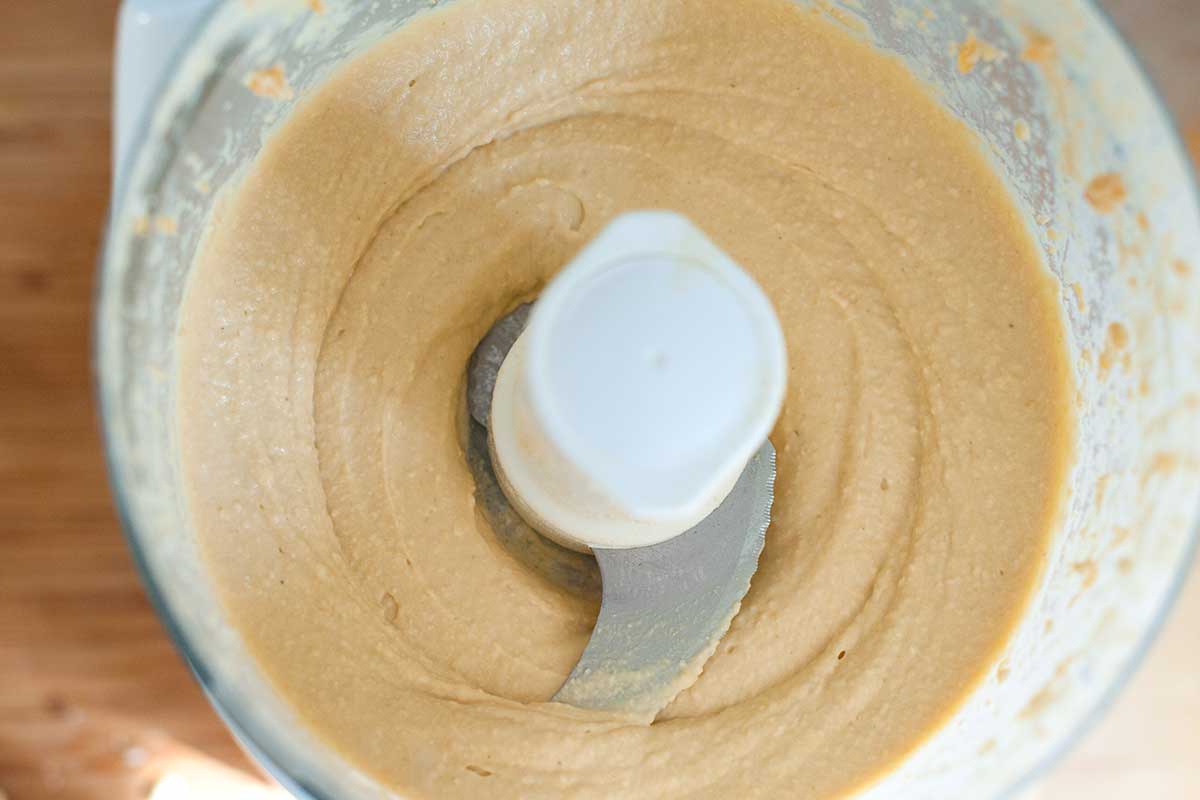
When it looks close to done, I add a splash of cold water while the processor is still running. After a few tablespoons of water, the mixture transforms into fluffy, creamy, whipped hummus.
I use cold water, but aquafaba (chickpea liquid) works incredibly well, too. If you want to learn more about it, here’s our ultimate guide to aquafaba. Some of our readers have also suggested using ice cubes instead of the water.
Do You Need to Peel the Chickpeas for Hummus?
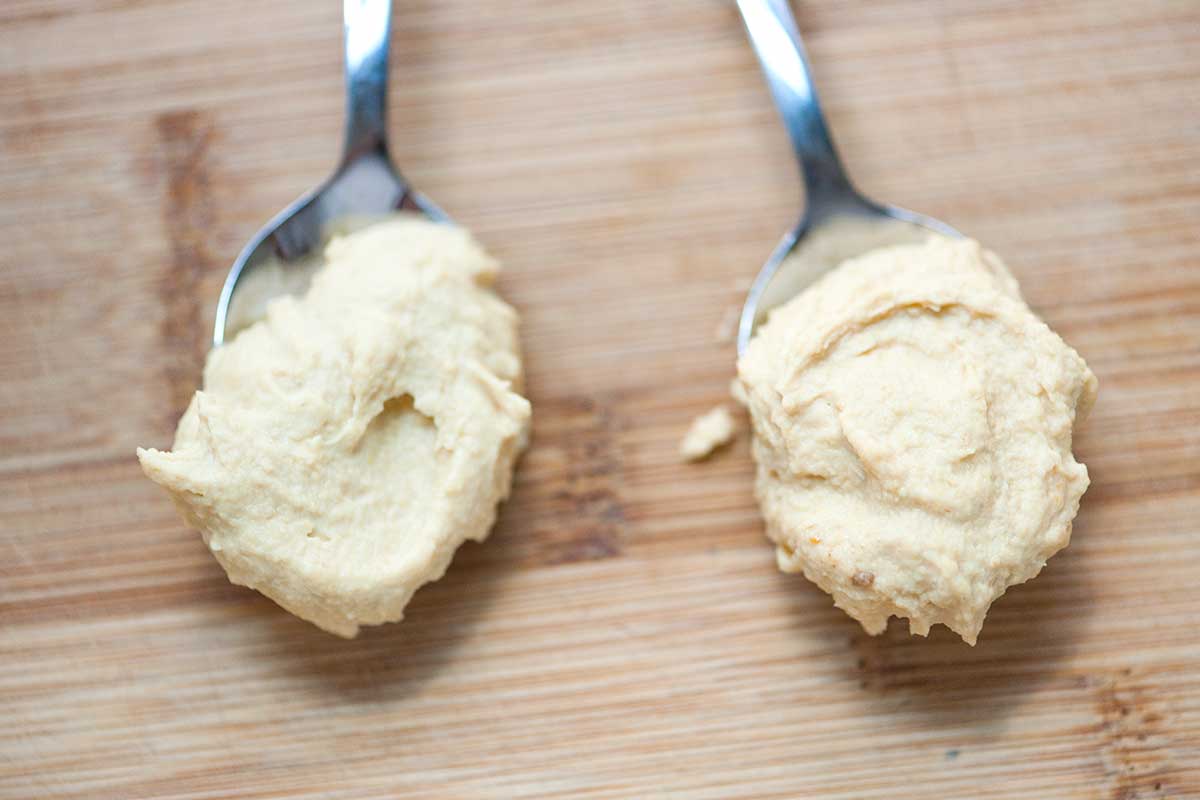
I usually skip peeling my chickpeas when making hummus, but it’s totally up to you! If you have some extra time and want the absolute smoothest texture, go ahead and peel them. It takes about 10 minutes to peel a can, and it does make a subtle difference. The photo below shows slightly smoother hummus made with peeled chickpeas on the left.
Even though the peeled chickpeas make a slightly smoother hummus, the difference isn’t huge. So, if you’re short on time, skip peeling. Your hummus will still be delicious! For more recipes with chickpeas, see all of our chickpea recipes.
What to Serve with Hummus
There are so many delicious ways to enjoy hummus! I love dipping fluffy flatbread, homemade pita bread, or fresh, crunchy veggies in it. It’s also delicious, next to other spreads and dips, like my homemade baba ganoush (a roasted eggplant dip), tzatziki sauce, homemade labneh, and our incredible tahini sauce. For extra flavor, try adding some toppings, as I do for my spiced beef and feta hummus.
Hummus is also great on sandwiches and wraps, alongside homemade falafel, or as a healthy, flavorful filling for lettuce wraps. I’ve even got a recipe for easy hummus cups with cucumber and tomato if you want something quick and easy.