
Which new-generation light bulb corresponds to my old bulb?
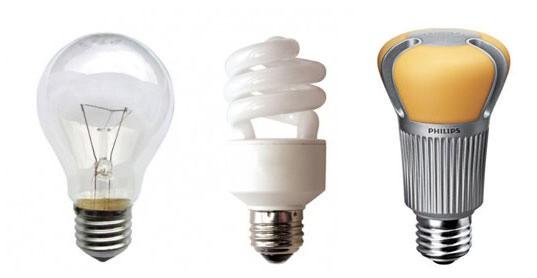
Did you know that the lighting in the average home uses around 16% of the total power consumption? This means the lighting in your home holds considerable cost-cutting potential! Replacing your old lamps with a modern alternative is a good start.
In order to help you choosing the right bulb, you will find below a series of handy comparison charts about:
- the power (expressed in watts)
- the light intensity (expressed in lumens)
- the colour temperature (expressed in kelvin)
When replacing an incandescent bulb or a halogen lamp, you will now have to choose between a LED or a compact fluorescent light. But what exactly is the difference?
Compare wattage
The comparison chart below shows you exactly which energy-saving light bulb or LED lamp you can replace your old incandescent light bulb or halogen lamp with to get the same amount of light (i.e. the power expressed watts).
Traditional bulb1 Halogen2 Compact fluorescent LED 25 watts 15 watts 6 watts 2 watts 40 watts 25 watts 10 watts 5 watts 60 watts 40 watts 15 watts 7 watts 75 watts 45 watts 18 watts 9 watts 100 watts 60 watts 25 watts 12 watts(1) off the market since 1 September 2012 (2) gradually phased out from 1 September 2018
Think in terms of lumens and forget about watts!
The light output of LED lamps continues to increase exponentially year by year. Which is why the comparison chart above merely serves as a guideline. Where a 7-watt LED lamp is currently required to deliver a certain light intensity for instance, in a year from now, this may well have dropped to just 5 watts, and is likely to have dropped even further to just 2 watts in four years’ time.
Looking to replace an old incandescent light bulb and don’t exactly know the equivalent LED lamp? The best way forward is to go by the number of lumens, which is now clearly specified on the packaging.
Traditional bulb Luminosity 100 watts 1.300-1.400 lumens 75 watts 920-1060 lumens 60 watts 700-810 lumens 40 watts 410-470 lumens 25 watts 220-250 lumens 15 watts* <150 lumens(*) lamps for refrigerators or ovens with very low light intensity
Colour temperature
Alongside the light intensity (number of lumens), the colour temperature is another deciding factor when choosing the right LED lamp.
The appropriate colour temperature enables you to choose the ambiance you would like for each room. Colour temperature is expressed in kelvin. The higher the colour temperature, the higher the Kelvin rating and the more blueish the colour. Light sources with a (comparatively) low temperature tend to be more reddish.
To give you some idea, below is a summary table showing the most common light types and their corresponding colour temperature:
Cool white 5,500 to 6,000 kelvin Neutral white 4,000 to 4,500 kelvin Warm white 2,500 to 3,000 kelvin Yellowish white +/- 2,200 kelvinFind out more about colour temperature
LED lamp or energy-saving light bulb?
Incandescent light bulbs are no longer an option, with halogen lamps too now on their way out. Which means the duel is now between compact fluorescent lights and LEDs. A quick reminder …
Energy-saving light bulbs
The energy-saving light bulb, also known as the compact fluorescent lamp, is actually a folded fluorescent strip tube lamp that fits inside a regular bulb fitting.
Benefits
- use 65 to 80% less power than a traditional incandescent light bulb
- last a lot longer (ca.10,000 hours instead of 1,000 hours for an incandescent light bulb)
Drawbacks
- contain a small amount of mercury: if an energy-saving light bulb drops to the floor and breaks, please be very careful how you clean it up because of the hazardous mercury vapours.
- get very hot compared with LEDs; they dissipate energy on heat, although to a lesser degree than traditional incandescent light bulbs or halogen lamps.
- most CFLs take a while to work up to full light intensity, which makes them unsuited for use in places where the light is switched on and off for short lengths of time (like the toilet).
LED lamps
LED lamps are made up of clusters of light-emitting diodes (LEDs). As they are so small, LED lamps come in all shapes and designs.
Benefits
- use up to 80% less energy than incandescent light bulbs
- have a service life of anywhere from 20,000 to 40,000 hours
- emit light right away and barely heat up
- are shock and vibration-proof
- available in a wide number of colours
Drawbacks
- comparatively expensive in terms of purchase price, but depending on how often they are used, the added outlay is recovered over time
- are dimmable, subject to a number of conditions
Link nội dung: https://studyenglish.edu.vn/in-order-to-save-electricity-an-ordinary-100-watt-light-bulb-can-be-replaced-by-a96360.html